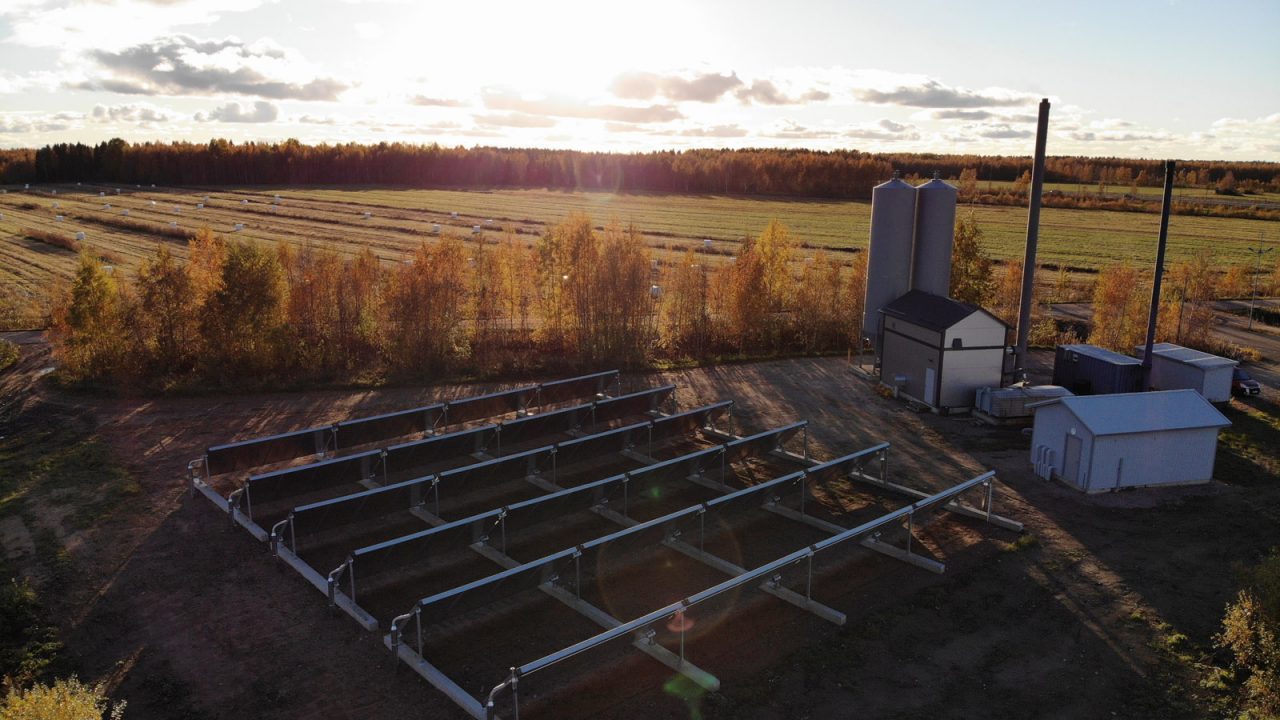
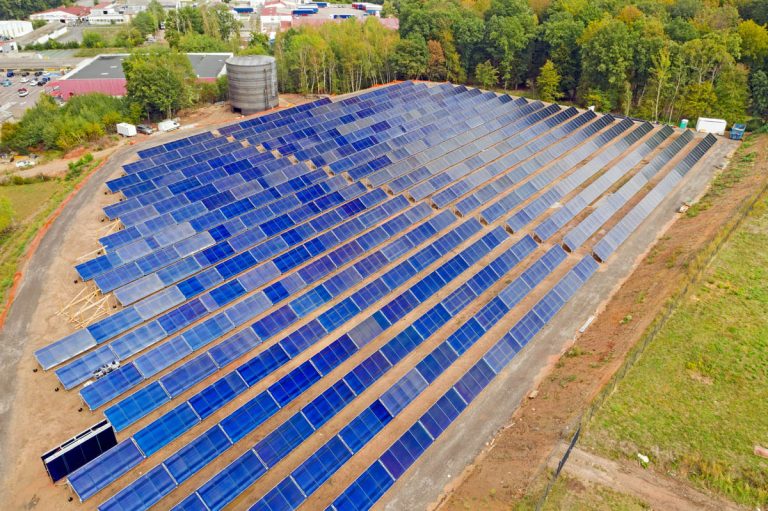
Savosolar delivered -once again- the largest solar thermal installation in Finland. This system is located way North in Tupos, Liminka - less than 200 km from the Arctic Circle.
The heating load of Tupos district heating is usually covered by wood pellets. Yet during summer time, the load is often so low, that the substantial wood pellet burner cannot be properly used and an oil burner got used, instead. The special challenge here has been to design a very efficient solar thermal system that could replace the oil consumption in summer to run the district heating network almost completely fossil-free.

Savosolar delivered -once again- the largest solar thermal installation in Finland. This system is located way North in Tupos, Liminka – less than 200 km from the Arctic Circle.
The heating load of Tupos district heating is usually covered by wood pellets. Yet during summer time, the load is often so low, that the substantial wood pellet burner cannot be properly used and an oil burner got used, instead. The special challenge here has been to design a very efficient solar thermal system that could replace the oil consumption in summer to run the district heating network almost completely fossil-free.
Mikkeli city, the home of Savosolar received the “Inspiring Solution Award” in 2018 Celsius City Summit for the Ristiina Village project. It is a green district heating energy concept with a clever combination of solar thermal and wood chips.
Savosolar was involved in this award winning project by delivering turn-key solar district heating installation to the Ristiina district heating plant.
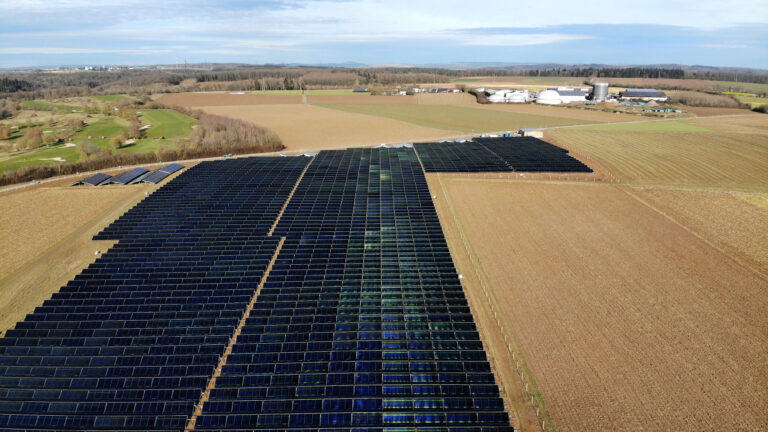
FORS A/S is an energy company owned by three Danish municipalities. Their district heating plant in Jyderup has about 900 customers and produces about 5000 MWh solar thermal energy per year. For the rest of its energy production, the plant uses two gas boilers with 7 MW thermal capacity and two gas engines with 6 MW electrical capacity.
In Jyderup, the collector field is a so-called hybrid field, with both single and double glazed collectors. The single glazed collectors are in the cold end of the collector rows and increase the low temperature as rapidly as possible, while the double glazed collectors are located in the warm side of the collector rows where it is more important to reduce the heat losses. The collector field also has double stanchions which allows for two collector rows to connect to one and the same pipe and thereby save costs and thermal losses.