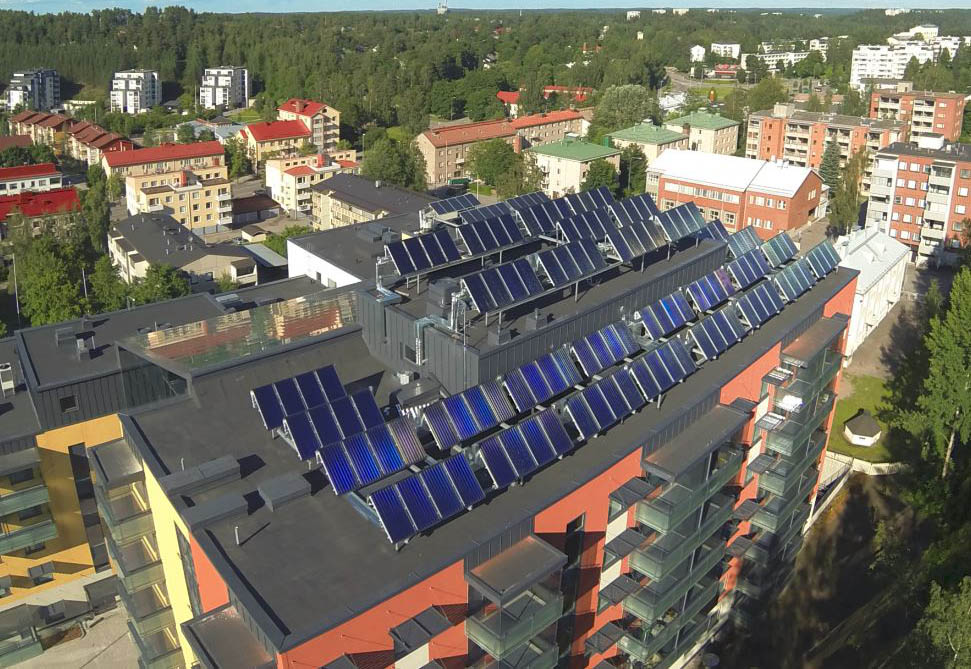
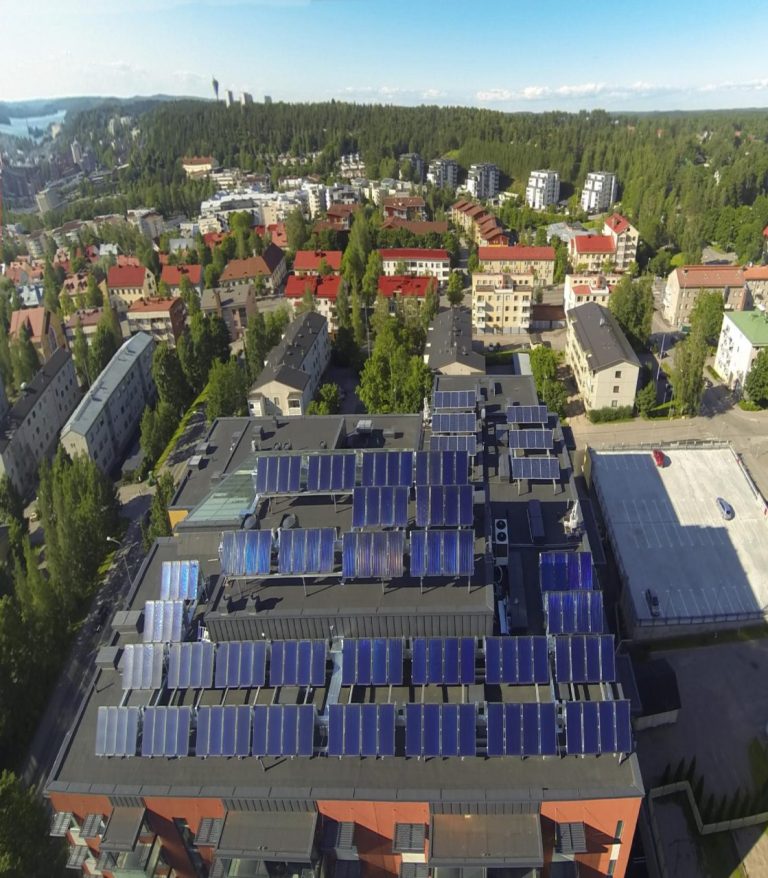
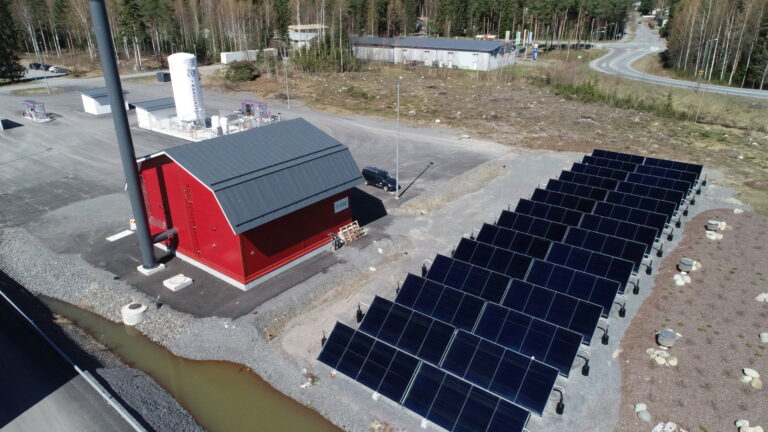
Onnelanpolku nursing home, which was built in 2013, is a so-called near zero energy building. To achieve this classification, the building needs to be well insulated and some of the consumed energy needs to be produced locally. A hybrid heating system for DHW and space heating was realized with the combination of solar thermal collectors and district heating.
Savosolar delivered 240 m² of collector area, which is used to cover 20–30% of the total thermal energy need of the building.

Swimming halls are very well suited for solar thermal production. Typically, their heat consumption is big and the required temperature level tends to be relatively low. In such cases solar thermal collectors are operating with a very high efficiency.
However, quite often swimming halls are closed some time of the year and summertime closure may mean extra challenges for solar heat supply.
For Hämeenlinna swimming hall Savosolar solved this issue by feeding surplus solar energy in summer to the nearby district heating network. Thus, the solar system is producing heat all days and depending on the swimming hall’s actual heat demand, the facility is either a district heating provider or a consumer.
Savosolar has been selected to deliver a tracker mounted solar thermal plant for the district heating of Nansha, Guanghzou, China. The system is combined with a geothermal seasonal storage and a chiller (not in Savosolar’s scope of supply) which allow the owner to deliver healthy energy, both heating and cooling, to its customers.
Lolland forsyning’s district heating plant in Søllested is located on the island of Lolland and was the first installation, where Savosolar’s double glazed collectors were used. The double glazing reduces heat losses through the glass side of collector and offers a higher efficiency, especially at higher operation temperature levels and during the darker months of the year. Søllested district heating plant has ca. 500 customers and also uses a 5 MW straw boiler and an oil burner to produce its heat.
The collector field in Søllested has a so-called hybrid field, with both single and double glazed collectors. The single glazed collectors are in the cold end of the collector rows and increase the low temperature as rapidly as possible, while the double glazed collectors are located in the warm side of the collector rows where it is more important to reduce the heat losses.
In Søllested, Savosolar was faced with a special challenge since the customer’s land has a sewerage pipe running through it. Since the owner of the sewer pipe needs to be able to access it in case of maintenance, Savosolar supplied a collector field which both optimised the use of the available land, while still providing access to the sewer pipe